
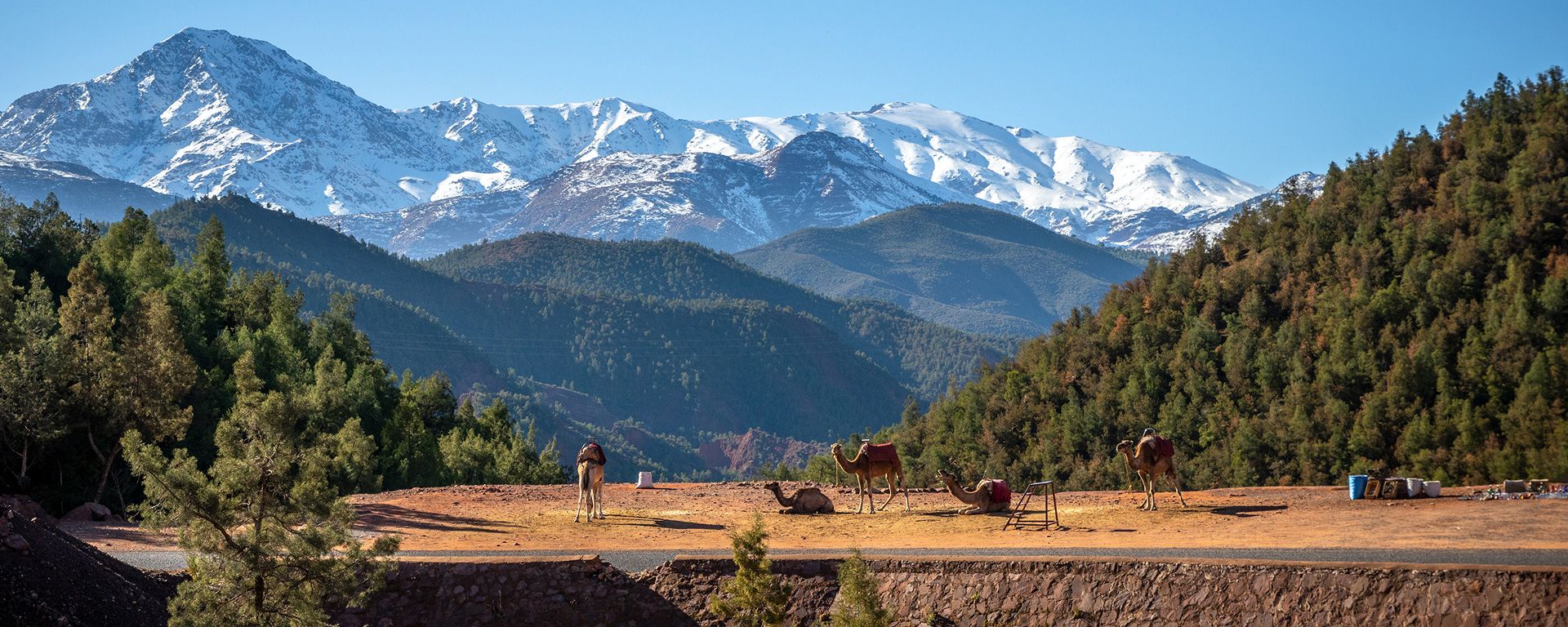
Morocco is a country of dramatic contrasts, from the snow-capped Atlas Mountains to the Sahara Desert. Because the landscape is so diverse, spanning Atlantic beaches, rugged peaks, and vast desert dunes, when is the best time to visit Morocco depends entirely on the type of adventure you want.
To help navigate the seasons, this guide breaks down the climate across the regions, revealing the “sweet spots” and local secrets that make each month unique.

A Guide to Morocco’s Seasons
Generally, spring (March to May) and autumn (September to November) are the goldilocks zones for travel. During these months, the heat is manageable for exploring the bustling Medinas, and the mountain passes are clear of snow.
| Month | Marrakech (Inland) | Agadir (Coast) | Sahara (Desert) | Atlas Mountains |
| January | 18°C | 20°C | 20°C | 10°C |
| April | 24°C | 22°C | 28°C | 18°C |
| July | 38°C | 26°C | 45°C | 25°C |
| October | 28°C | 25°C | 30°C | 20°C |
Spring Bliss: Why May is the Local Favourite
As the winter rains fade, the countryside transforms into a lush green carpet. Morocco’s weather in May is arguably the most beautiful of the year. The valleys are in full bloom, especially the Rose Valley (M’Goun), where the air is sweet with the scent of Damascus roses, which are harvested for oils and perfumes.
In May, the temperatures in the main cities sit comfortably in the mid-20s, making it perfect for long walking tours of the souks without the intense heat of mid-summer. It is also the best time for hikers to tackle the foothills of Mount Toubkal before the high-altitude heat becomes too draining.

Autumn Gold: Exploring the Red City in October
How hot is Morocco in October? This is often considered the “secret” peak season. In Marrakech and Fes, the daytime highs hover around 28°C, providing that perfect summer-holiday feel without the 40°C spikes that can happen in July.
October is the month of the date harvest in the southern oases. A local hidden gem is visiting the Skoura Palmery during this time; the sight of thousands of date palms laden with fruit against the backdrop of ancient mud-brick Kasbahs is unforgettable. The Atlantic water also remains warm enough for swimming, making it a great time for a coastal escape.

Winter Sun: Is Morocco Hot in December and February?
Winter in Morocco is a tale of two climates. Yes, Morocco is hot in December. In places like Agadir or Taghazout, you can easily spend the afternoon in a t-shirt on the beach with temperatures hitting 20°C. However, as soon as the sun dips below the horizon, the temperature drops substantially.
- The Desert Secret: December is actually one of the best times to visit the Sahara. The days are crisp and clear, providing the most incredible stargazing opportunities of the year, though a warm jacket is essential at night.
- Late Winter: Is Morocco hot in February? This is the “Almond Blossom” season. In the Anti-Atlas mountains near Tafraoute, the valleys turn white and pink with blossoms. It’s a stunning time for photography, with daytime temperatures creeping back up to the low 20s.

Summer Survival: Navigating the Heat
July and August are the months of the “Chergui”, a fiercely hot wind that blows in from the Sahara. While Marrakech and the desert can feel like a furnace, this is the best time to head to the coast.
Cities like Essaouira and Agadir stay remarkably cool thanks to the Atlantic winds. A local secret for summer is heading to Oualidia, a coastal lagoon famous for its oysters, where the mist from the ocean keeps the temperature a refreshing 25°C even when the inland cities are sweltering.

When to Go Where in Morocco:
The Coast (Agadir, Essaouira, Tangier)
The coast is a year-round destination. Because of the Atlantic influence, it rarely gets too hot in summer or too cold in winter. For surfers, the “big wave” season runs from December to March.
The Mountains (High Atlas, Rif Mountains)
Winter (December to March) brings snow, often making high-altitude trekking impossible without specialist gear. For the famous blue city of Chefchaouen, spring is ideal, as the surrounding Rif Mountains are covered in wildflowers.
The Imperial Cities (Marrakech, Fes, Meknes)
Avoid the peak of summer if possible. These cities are best enjoyed when the evening air is cool enough to enjoy dinner on a rooftop Riad. April, May, October, and November are the gold-standard months here.
Regardless of when you choose to go, Morocco’s beauty lies in its ability to surprise. From the almond blossoms of February to the rose harvests of May, there is never truly a bad time to visit—only different versions of paradise to discover.
Essential Travel Advice: Frequently Asked Questions
Planning a trip involves more than just checking the forecast. To ensure a smooth journey, here are some of the most common questions to think about before travelling to Morocco:
What language is spoken in Morocco?
The two most-frequently spoken languages are Darija (Moroccan Arabic) and Tamazight (Berber). However, French is the unofficial second language and is widely used in business, menus, and hotels. While English is common in tourist hubs, knowing a few words of Darija will go a long way.
What is the currency in Morocco?
The official currency is the Moroccan Dirham (MAD). It is a restricted currency, meaning you usually cannot buy it outside of Morocco. You can easily exchange GBP, EUR, or USD at the airport or use ATMs (which are plentiful) upon arrival.
Do you need a visa for Morocco?
For many nationalities, including citizens of the UK, EU, USA, and Canada, the answer is no—you typically do not need visa for Morocco for stays up to 90 days. However, always check the latest entry requirements for your specific passport before booking.
How long is the flight to Morocco?
From London and most parts of the UK, the flight is a surprisingly short 3.5 hours.
What plugs are used in Morocco?
Morocco uses Type C and Type E plugs, which are the same two-pin round plugs used in most of Europe, so pack an adapter.
Do you need injections for Morocco?
While there are no mandatory jabs to enter Morocco (unless you are arriving from a country with a high risk of Yellow Fever), it is generally recommended to be up to date on your standard vaccinations like Tetanus and Typhoid. Always ask your GP or a travel clinic at least eight weeks before your trip.
What to wear in Morocco?
While Morocco is quite liberal in tourist areas like Agadir and Marrakech, it is overall a conservative country. The best advice for what to wear in Morocco is to opt for loose-fitting, breathable fabrics that cover the shoulders and knees, especially when visiting rural areas or religious sites. This also helps with the heat!
Can you drink in Morocco?
Yes, you can drink alcohol in Morocco, but it is not available everywhere. Licensed hotels, bars, and some restaurants in tourist areas serve alcohol. It is, however, considered disrespectful to drink in public or show outward signs of drunkenness in the streets.
So has this helped you plan where to visit in Morocco? Whether you are chasing winter sun in December or the springtime blooms in May, Morocco offers a timeless escape for every season.
Discover Secret Escapes’ Handpicked Morocco Deals
Whether you’re after a luxury beach holiday in Agadir or a peaceful trip to the Atlas Mountains, discover the secrets of Morocco with Secret Escapes’ outrageously bookable deals.
For more travel advice and inspiration, deep dive further into the Escapist magazine, or get in touch for more information on outrageously bookable deals.
This article was written in partnership with Visit Morocco.