
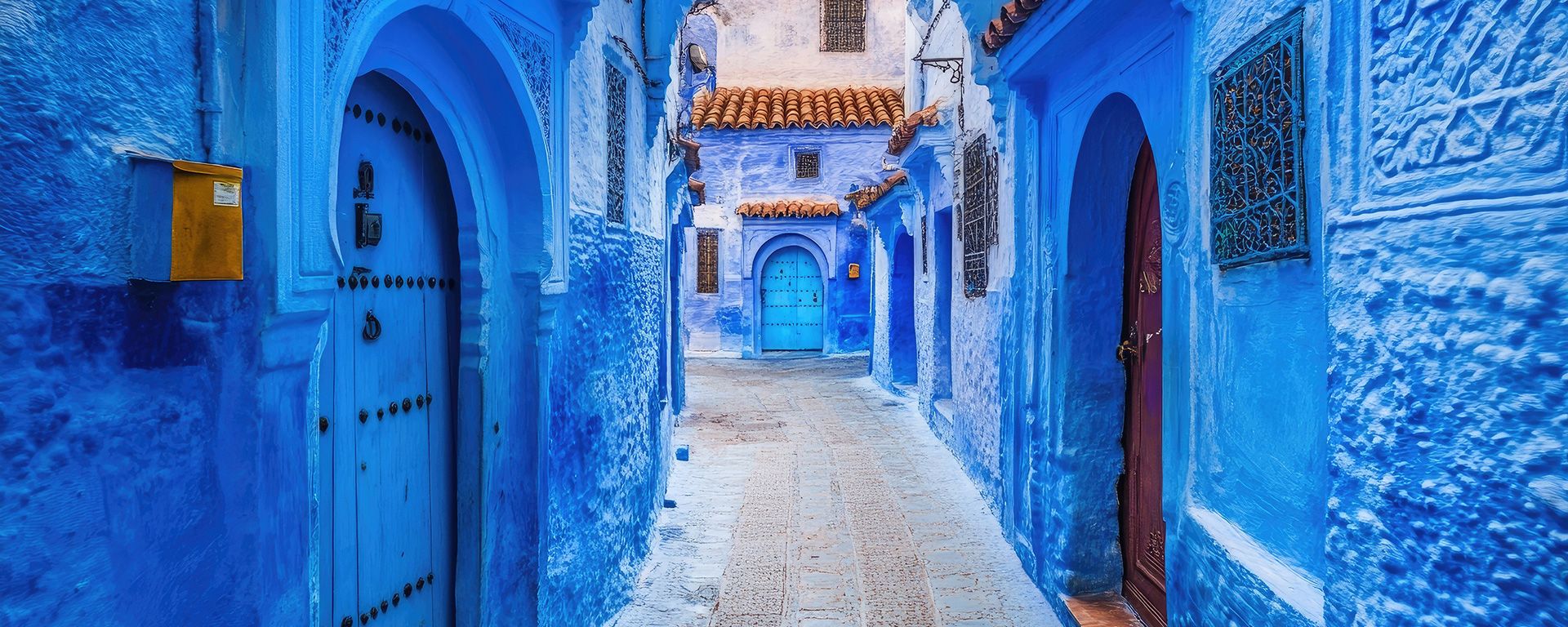
The drive from the “White City” of Tangier to the “Blue Pearl” of Chefchaouen takes you from the cool Atlantic coast through approximately 112 km of paved roads that wind through the mystical Rif Mountains. This isn’t your typical souks and sand dunes; it’s a Morocco of jagged peaks, hidden waterfalls, and cities that have inspired everyone from Henri Matisse to The Rolling Stones.

What to See in Tangier?
Before hopping in the car, spend some time in Tangier. Forget its reputation as a gritty port town; today’s Tangier is a chic, cosmopolitan hub where the Med and Atlantic meet.
If you are wondering what to see in Tangier, Morocco, begin at the Grand Socco. This square is the gateway to the Medina. Just around the corner at the Cinema Rif, a hub for local artists and the perfect spot for a morning nous-nous (half-coffee, half-milk). After your morning fuel, head to the Kasbah Museum, a former Sultan’s Palace that sits at the highest point of the city and offers breathtaking views of the Straight of Gibraltar. In the afternoon, make your way to the Medina and the American Legation, a hidden gem at its heart that offers a peaceful oasis in the hubbub. If you’re in need of an afternoon pick-me-up, make a pit stop at Café Hafa, somewhat of a local institution since 1921, and the perfect spot for a mint tea with a view of the sea.

What to Do in Tangier?
Beyond the standard postcards, there are plenty of unique things to do in Tangier. For a local secret, head to the Phare de Cap Spartel at sunset. Most tourists visit the Caves of Hercules (which are legendary and worth the stop), but few linger on the coastal road leading back to the city, where locals set up small grills to sell fresh sardines right by the water.
Another hidden gem is the Librairie des Colonnes, a bookstore that was once the haunt of writers like Paul Bowles and Samuel Beckett. It’s the best place to pick up a localised map or a book of Moroccan poetry before hitting the road.

Practical Tips for Hiring a Car and Driving in Morocco
Renting a car gives you the freedom to explore the “in-between” spots that buses skip. Here is the lowdown on staying safe and savvy on the road:
- Book Ahead: Especially in 2026, demand is high. Stick with reputable international brands or well-reviewed local agencies like Samicar.
- Check the Spare: Before you leave the rental office, ensure you have a spare and a jack. The mountain roads can be tough on the tyres.
- Identification: You’ll need your passport, a valid driver’s license, and an International Driving Permit (IDP).
Driving Safety and Advice
- Like much of Europe, in Morocco, they drive on the right-hand side of the road.
- Morocco has a unique approach to roundabouts. Generally, the car on the inside has priority, but in some older urban areas, the entering car may have the right of way. When in doubt, go slow and follow the local flow.
- Police Checkpoints: These are common and routine. If you see a “Halte” sign, slow down significantly. Usually, they will just wave you through, but if stopped, be polite and have your papers ready.
- Between Tangier and Chefchaouen, the roads wind through the mountains. Lighting is sparse. Aim to arrive before sunset.

Tetouan and the Rif Mountains
As you head south toward the Blue City, avoid the motorway A-roads and instead opt for the N2 national road, which takes you through Tetouan. Often an overlooked stop, its Medina is a UNESCO World Heritage site and feels much more authentic than some of those in the larger cities. For a true hidden gem, look for the Ensanche (the Spanish Quarter), where the architecture is reminiscent of Seville.

Arriving in Chefchaouen: The Blue Pearl
As you rise up through the mountain roads to approximately 600 metres above sea level, suddenly, everything turns blue. Chefchaouen is best explored with zero agenda, but if you want to see the town like a local, you’ll want to do more than simply snap the city walls.
Unique Experiences in Chefchaouen
- Savour the “Gold” of the Rif: Chefchaouen is famous for its Jben (fresh goat cheese). Look for the Berber women in striped foutas selling them in the markets. Pair it with fresh “Harcha” bread for the ultimate Moroccan breakfast.
- Tea at Ras El-Maa waterfall: Find one of the small cafes where they place chairs in the shallow water to keep your feet cool.
- Dine at Bab Ssour: Skip the touristy main square and find this local favourite. Order the Bissara (fava bean soup), which is hearty, authentic, and costs just a few dirhams.
- The Artisanal Weavers: Chefchaouen has a long history of wool weaving. Head toward Bab el-Ansar to find small workshops where you can buy handwoven blankets directly from the artists, the perfect souvenirs.
Active Adventures
For a truly special experience, visit the Spanish Mosque at dusk. It’s a half-hour walk uphill, but it offers a panoramic view of Chefchouan’s cerulean streets. If you’re a serious hiker, take on Jebel al-Kalaa, the mountain peak looming over the city, for a challenging but rewarding 6-hour trek.
If you have an extra day to explore, drive a further 45 minutes to Akchour. The hike to “God’s Bridge”, a massive natural stone arch, features crystal-clear swimming holes that few “day-trippers” ever get to see.
The road from Tangier to Chefchaouen is a journey through Morocco’s soul. From the flair of Tangier to the quiet, indigo alleys of the Rif, this is the Morocco you don’t want to miss.
Discover Secret Escapes’ Handpicked Morocco Deals
Ready to hit the road and experience the best of Morocco? Find the best Morocco hotels and package holidays with Secret Escapes.
For more travel advice and inspiration, deep dive further into the Escapist magazine, or get in touch for more information on outrageously bookable deals.
This article was written in partnership with Visit Morocco.