
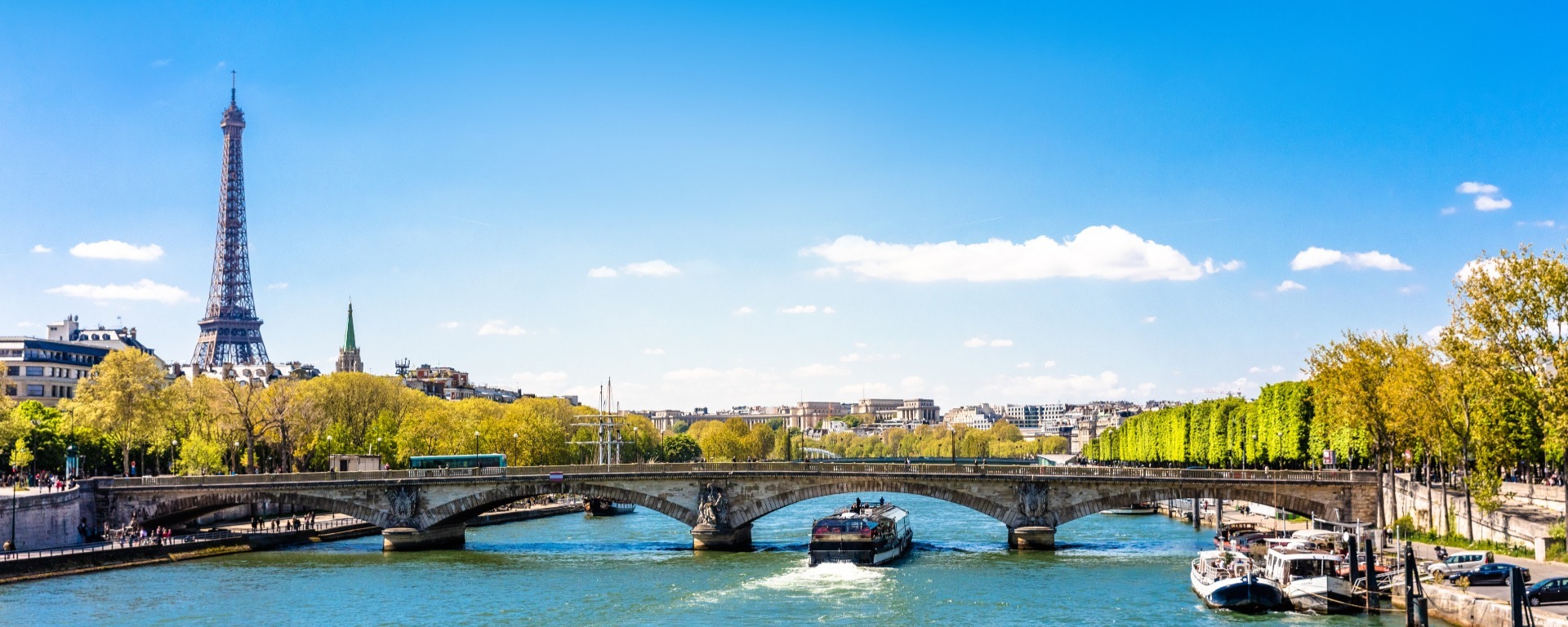
Come wind, rain, or shine, Paris lures all manner of tourists in with its romantic aura, timeless elegance, and grace. Whether you’re boating across a quiet lake or tumbling out of atmospheric bars, the French capital offers endless ways to please its first-time visitors and keep them coming back for more – and with direct Eurostar services from London in just over two hours, you’ll have every reason to do so.
In this guide, we break down our favourite arrondissements and why you, too, will fall head over heels with them.

Paris 101: What’s the Difference Between the Left and Right Bank?
First things first, you need to know the basics. If you’re travelling to Paris, you’ll frequently hear the terms ‘Rive Droite’ (Right Bank) and ‘Rive Gauche’ (Left Bank), which, respectively, refer to the north and south of the Seine – a 483-mile-long river flowing through the city.
The difference between either bank is both geographical and cultural. The Right Bank is located north of the Seine and is known for being the centre of business, grand boulevards, and high-end shopping, while the Left Bank is traditionally known as the intellectual and cultural heart of the capital, home to the Latin Quarter and endless historical monuments.
However, this divide is neither formal nor definitive; there are luxury shopping districts in the Left Bank and historical landmarks in the Right Bank. Using the Seine as a natural separator of the city makes it simpler for tourists to have an idea of where each of Paris’ 20 arrondissements (districts) is located and how to navigate them.
1st, 2nd, and 7th arrondissements: The Heart of the City
No visit to the City of Light would be complete without a tour of its heart – a pulsating neighbourhood overflowing with history and elegance and home to some of its most famous attractions. If you’re short on time, put these arrondissements at the top of your list for a fail-safe, albeit bite-sized, picture of Paris.
Start at the Musée de l’Orangerie, tucked away in the Tuileries Gardens, where you’ll marvel at the world-famous ‘Water Lilies’ by Monet. At the other end of the gardens, you’ll find the Louvre (book a morning slot to avoid big crowds) and beyond that, the western portion of l’Île de la Cité – home to Notre-Dame and the royal 13th-century Sainte-Chapelle, whose tall stained glass windows are positively mesmerising.
Cross the river to the Left Bank and stop at the Musée d’Orsay, which hosts the largest collection of Impressionist and post-Impressionist masterpieces in the world, before heading down to the country’s most famous landmark: the Eiffel Tower. Make your way to the top and treat yourself to a meal with an incredible view. If you want to get a picture with the iconic landmark and next to no crowds, skip Trocadéro and Champs de Mars and head to Rue de l’Université or Avenue des Camoëns.
8th arrondissement: Champs Élysées and the Triangle d’Or
On the other side of the Tuileries Garden is Place de la Concorde, over 20 acres of beautiful fountains and sculptures, which leads to the Champs Élysées, a mile-long avenue housing flagship stores, luxury boutiques, theatres, and cafés. Do not miss this buzzing arrondissement if you’re gearing up for a fun-filled day of retail therapy.
Visit Grand Palais and Petit Palais, home to incredible art collections, then head to the Triangle d’Or (Golden Triangle), an upscale district bordered by Avenue Montaigne, Avenue George V, and the Avenue des Champs-Élysées, where you’ll find the flagship stores for designer brands, such as Dior, Chanel, and Gucci. Continue up the avenue to find the must-see Arc de Triomphe, which offers unbeatable views of the city skyline.
3rd and 4th arrondissements: Cultural and LGBTQ+ Hotspot
Le Marais, spanning the 3rd and 4th arrondissements, is the historic and cultural heart of the LGBTQ+ community in Paris, famous for its pride flags, inclusive bars, and vibrant nightlife. A tourist magnet, the neighbourhood is rife with eye-catching architectural displays, hip locals and inviting bars and restaurants.
You’ll also find the city’s old Jewish quarter here if you’re looking for a unique cultural experience. Literature-lovers shouldn’t pass up a visit to the Musée Victor Hugo, where the author himself once lived, while art aficionados will find heaven at the Musée Picasso and Centre Pompidou. Foodies are well catered for around these parts, too, with the Marché des Enfants Rouges spilling with international delicacies and artisan goods.

5th arrondissement: The Latin Quarter
A bustling student neighbourhood spanning the prestigious Sorbonne University, the Latin Quarter is known for its lively nightlife and historical landmarks. Stroll through its stunning streets to find a wealth of cafés and bookshops, including the landmark Shakespeare & Company and the Pantheon. If you want a break from the hustle of the city, retreat to the Jardins des Plantes, a vast botanical garden with one of the oldest zoos in the world, the Ménagerie Zoo.

18th arrondissement: Paris’ Bohemian District
If you’re looking for a blast back to the city’s bohemian past, you could really find no better than Montmartre, a noteworthy neighbourhood that inspired artists from around the world, from Picasso to Van Gogh, Renoir, and Matisse, to name but a few. Ascend the hill to the Sacré-Cœur basilica, catch a performance of outrageously epic proportions at the Moulin Rouge, and keep things low-key and laid-back as you lose yourself in the village’s ultra-charming cobbled streets. Top your Paris bucket list with this neighbourhood for an inspiring dose of art and a taste of the bohemian way of life.
12th and 16th arrondissements: The City’s Green Lungs
Paris’ ‘green lungs’ refers to the two public parks bordering either side of the capital: Bois de Vincennes in the 12th arrondissement and Bois de Boulogne in the 16th. Seize a chance to get away from the tourist trail with a trip to either neighbourhood, where calming green spaces and courtyards inspire a sense of tranquillity – while still putting you within easy reach of world-famous sights.
The Bois de Vincennes is Paris’ largest public park, featuring four lakes, two of which offer rowboat rentals, a botanical garden, a zoo, and the Château de Vincennes. The Bois de Boulogne, the city’s second biggest park, is twice as big as New York’s Central Park, and offers stunning botanical gardens, several lakes, a waterfall, and the Jardin d’Acclimatation – France’s first theme park.
Where Should I Stay in Paris to be Near Everything?
If you want to stay in Paris to be near everything, the 1st and 2nd arrondissements are the best choice. These central districts put the Louvre, Tuileries Garden, and the Châtelet transport hub within walking distance, making it the most efficient base for short trips. However, due to the central location, hotels in these districts are expensive, which is why Secret Escapes offers incredible deals on Paris breaks so you can enjoy luxury on a budget.

Book Your Dream City Break in Paris with Secret Escapes
Paris is a dream destination for many, renowned for its historical landmarks, stunning architecture, rich culture, and hefty price tag. With Secret Escapes’ outrageous deals, you can cross the City of Lights off your travel bucket list without breaking the bank. From overnight stays to weekend city breaks and longer getaways, benefit from incredible savings on our Paris breaks.
For more travel advice and inspiration, deep dive further into the Escapist magazine, or get in touch for more information.


