
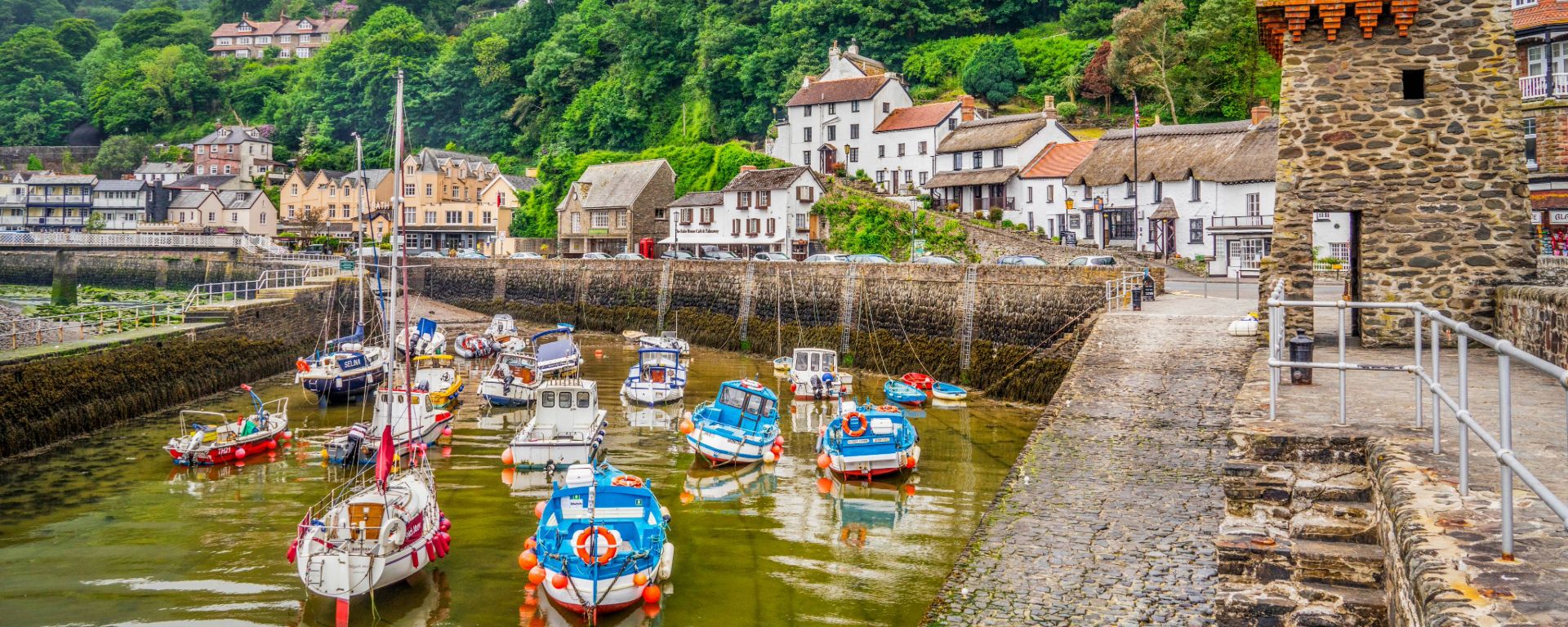
A quintessential British escape, Devon has the lot: stunning seaside with sandy beaches, rugged moorland, quaint fishing villages and welcoming country pubs. From the Jurassic Coast to the wilds of Dartmoor, there’s a host of classic Devon escapes to enjoy. But for those looking for the trail less travelled, the winding lanes and secluded coves, hidden gem eateries and local’s haunts, discover this secret guide to the best of all things Devon.
Discover Devon’s lesser-known coastal gems
One of its greatest draws, the coastlines round these parts are unashamedly spectacular. Go when the weather blesses those beaches, and a little insider knowledge helps beat the crowds.
Mouthmill Beach and Blackchurch Rock
For a wilder take on the Devon coast, head to Mouthmill, a secluded cove on the Hartland Peninsula. Reached via coastal paths and woodland trails, this atmospheric spot is framed by dark cliffs, rocky shores and the striking Blackchurch Rock, a natural sandstone formation pierced by two arches. The wider peninsula is worth exploring, where unique rock formations stud the coast.
Lee Bay: a quieter corner of North Devon
Just west of Ilfracombe, Lee Bay is a word away from the surfing meccas of North Devon’s coast. This pretty seaside village is surrounded by wooded valleys and bucolic countryside, with a pretty beach that feels secluded and serene. Pair it with coastal footpath rambles and a relaxed lunch back in the village and you’re set for a laidback piece of North Devon.
Heddon’s Mouth: a serene walk on Exmoor
Tucked inside Exmoor National Park, Heddon’s Mouth is reached by a scenic walk through the wooded Heddon Valley. The river winds towards a pebble beach beneath imposing cliffs, creating a wonderfully secluded spot that offers a rare bit of solitude for such a popular area. Make an afternoon of it after the circular walk with a stop at the historic Hunter’s Inn, a characterful country inn near the start of the route.
Are there any historical sites or landmarks near Devon’s beaches?
Devon’s coastline is dotted with historic landmarks. Berry Head, near Brixham, has Napoleonic-era fortifications overlooking Tor Bay, while Dartmouth Castle has guarded the entrance to the River Dart for centuries. Further along the South Devon coast, Slapton Sands saw the rehearsal for the D-Day landings in 1944, that tragically were marred by their own tragedies and a particularly shocking death toll for what was only meant to be a training exercise.

Explore Devon’s National Landscapes and wild open spaces
Devon isn’t just about pretty coastlines. Its protected landscapes are nothing short of awe-inspiring, from ancient woodlands to expansive moorlands. Explore them here.
Braunton Burrows: a landscape like no other
Part of the North Devon Coast National Landscape and the North Devon UNESCO Biosphere Reserve, Braunton Burrows is one of Britain’s most important sand dune systems. Discover rare flora and fauna and an array of wildlife, across winding tracks that put you between forest and sea.

The Valley of Rocks: Exmoor’s natural spectacle
One of the most extraordinary of Devon’s coastal sights, the Valley of the Rocks sits near Lynton along the north coast of the county. Towering rock formations and piercing crags overlook vertiginous drops into the sea, a spellbinding sight connected by wild trails and a collection of feral goats. Follow the paths for far-reaching views and captivating natural drama. For a memorable outing, combine the valley with a visit to Lynton and Lynmouth, two neighbouring settlements connected by the historic water-powered cliff railway.
Dartmoor’s quieter side
Dartmoor National Park is famed for its granite tors, ancient stone circles and wide-open moorland, but its appeal extends well beyond the best-known landmarks. Head towards the quieter lanes around Widecombe-in-the-Moor and the surrounding villages for traditional stone cottages, winding walking routes and welcoming country pubs. For something more adventurous, seek out the dramatic rock formations around Haytor or explore the wooded river valleys on the moor’s fringes.
What are the main attractions in North Devon’s National Landscape areas?
The North Devon Coast National Landscape is known for its rugged cliffs, expansive beaches, hidden coves and pretty coastal villages. Highlights include the Hartland Peninsula, Lee Bay, Morte Point, Braunton Burrows and the coastal scenery around Combe Martin.
The South Devon National Landscape offers a different character, with sheltered estuaries, rolling farmland, wooded valleys and picturesque coastal settlements. Both areas are ideal for walking, wildlife watching, photography and discovering small communities away from the busiest tourist centres.
What activities are popular in Devon’s national parks and protected areas?
Walking, cycling, wildlife watching and photography are among the most popular ways to explore Devon’s protected landscapes. On Dartmoor, seek out granite tors such as Haytor, explore historic villages or follow trails through wooded river valleys. Along the North Devon coast, coastal paths offer spectacular sea views, while Braunton Burrows is a fascinating place to discover rare plants and wildlife.
Visit Devon’s prettiest villages and characterful towns
Devon is a wonderful patchwork of old fishing villages, rural hideaways and bustling towns, where travellers can indulge in foodie experiences, boutique shopping and gorgeous places to stay.
Clovelly: a timeless fishing village
Clovelly is one of Devon’s most distinctive coastal villages, with whitewashed cottages tumbling down a steep cobbled street towards a small harbour. Its brimming with historic character and offers spectacular sea views, making it quite a special destination when exploring Devon. The steep streets, old cottages and maritime traditions are all a bit of a throwback, bursting with charm. Postcard pretty, if ever a place typified it more.
Mortehoe: a village with a wild coastline
Just beyond Woolacombe, the village of Mortehoe is a picturesque base for exploring a wilder side of North Devon’s coast. A clutch of traditional cottages, historic church and small museum provide a glimpse into the area’s past, while nearby Morte Point offers dramatic views and walking routes above the sea.
The headland is also associated with shipwrecks and the area’s maritime history, with stories best heard from locals down the nearby pub.
Totnes: independent shops and bohemian spirit
Devon’s bohemian outpost, Totnes is a handsome market town with a mix of Tudor and Georgian shopping streets now filled with vegan cafes, zero-waste shops and independent boutiques. Alternative living is what Totnes has become famous for, adding to the already characterful charm of the place. There’s an old castle, a river, and charming streets a-plenty.
It’s also a useful base for exploring the surrounding countryside and the River Dart. Spend a morning browsing the town before heading out for a walk or a riverside lunch.
Which are the must-see places in Devon?
Devon’s classics balance the wild and the characterful. You can explore dramatic granite tors in Dartmoor National Park, wander down the traffic-free cobbled cliffs of Clovelly Village, catch world-class waves along the three-mile golden stretch of Woolacombe Beach, or take a scenic ferry ride to the historic fortress of Dartmouth Castle.
Where to Eat in Devon: Local Favourites and Fine Dining
Post-walk pub eats, farm-to-table dining, and indie producers selling their wares in markets and delis, Devon has a thriving foodie scene to tuck into.
Are there any must-visit restaurants in Devon for food lovers?
For seafood, head to The Seahorse in Dartmouth, a chic bistro known for Italian-inspired dishes that champion local catches. For a countryside experience, Riverford Field Kitchen near Buckfastleigh celebrates seasonal organic produce in a farm setting. Meanwhile, The Farmers Arms in Woolsery offers a welcoming village-pub atmosphere and a farm-to-table vibe.
What are the top fine dining restaurants in Devon?
For a special occasion, Lympstone Manor near Exmouth offers refined cooking and views across the Exe Estuary. Gidleigh Park, tucked into the countryside on the edge of Dartmoor, is another destination for elegant dining in a country-house setting. For a coastal atmosphere, The Elephant in Torquay is known for modern British cooking overlooking the harbour.
Explore the Best of Devon and the British Coast with Secret Escapes’ Deals
Fancy your own quintessentially British break? Find the best deals on Devon hotels with Secret Escapes.
For more travel advice and inspiration, deep dive further into the Escapist magazine, or get in touch for more information on our worst-kept secret deals.


