
Malta is having her moment, and we’re here for it. In 2025, Malta’s capital of Valletta was awarded the title of number one “City in the World” in the Condé Nast Traveller Readers’ Choice Awards, and most recently, the Port Region of Malta has been named as the 2026 Region of Culture. If all of that good press has you planning a trip and asking when is the best time to visit Malta, we’ve got you covered.

Malta’s Monthly Weather
If you’re dreaming of a Mediterranean Malta holiday, understanding Malta’s weather and the best time to visit is the first step to successfully planning your escape. The climate in Malta varies beautifully throughout the year; for instance, Malta’s weather in April offers a refreshing spring breeze perfect for exploring Valletta, while Malta’s weather in May sees temperatures begin to climb as the outdoor dining season truly kicks off. Whether you are checking out St. Paul’s Bay for a summer beach holiday or looking at Malta’s monthly weather to find a quiet winter retreat, you’ll find that the islands are remarkably sunny year-round. While the peak summer heat is great for sun-seekers, many find that the best time to visit Malta is during the shoulder seasons when the sun is warm, but the historical sites are much cooler to explore.
To help you plan your trip to Malta, here is a breakdown of Malta’s monthly averages, including daytime highs, rainfall, and hours of sunshine.
Malta’s Monthly Weather Averages
| Month | Avg. High Temp | Avg. Rainfall | Daily Sunshine |
| January | 15°C (59°F) | 90–95 mm | 5–6 Hours |
| February | 15°C (59°F) | 60–63 mm | 6–7 Hours |
| March | 17°C (62°F) | 37–39 mm | 7–8 Hours |
| April | 19°C (66°F) | 15–26 mm | 8–9 Hours |
| May | 23°C (73°F) | 9–12 mm | 10 Hours |
| June | 27°C (81°F) | 2–5 mm | 11–12 Hours |
| July | 30°C (86°F) | 0 mm | 12 Hours |
| August | 31°C (88°F) | 6–8 mm | 11–12 Hours |
| September | 28°C (82°F) | 29–67 mm | 8–9 Hours |
| October | 24°C (75°F) | 63–77 mm | 7 Hours |
| November | 20°C (68°F) | 91–109 mm | 6 Hours |
| December | 17°C (62°F) | 108–110 mm | 5 Hours |
Spring in Malta: Best for Sightseeing
The spring months between March and May are an ideal time for sightseeing in Malta, as the mild weather provides the perfect backdrop for exploring the island’s rich architectural and prehistoric heritage. You can wander through the 16th-century streets of Valletta to marvel at Caravaggio’s masterpieces in St. John’s Co-Cathedral or take in panoramic harbour views from the Upper Barrakka Gardens. The hilltop medieval town of Mdina offers a peaceful escape through its car-free winding alleys, while the Three Cities provide a quiet look into the islands’ maritime past. For a deeper journey through time, spring is the best season to visit Malta’s ancient wonders, including the subterranean Ħal-Saflieni Hypogeum and the Ġgantija Temples on Gozo, which are among the oldest freestanding structures in the world.

- Average High temperature: 17°C to 23°C (62°F to 73°F)
- Average Low temperature: 10°C to 15°C (50°F to 59°F)
- What to pack: Comfy walking shoes, light layers, a jacket for the evening and an umbrella for light rainfall.
Summer in Malta: Peak Sun Season
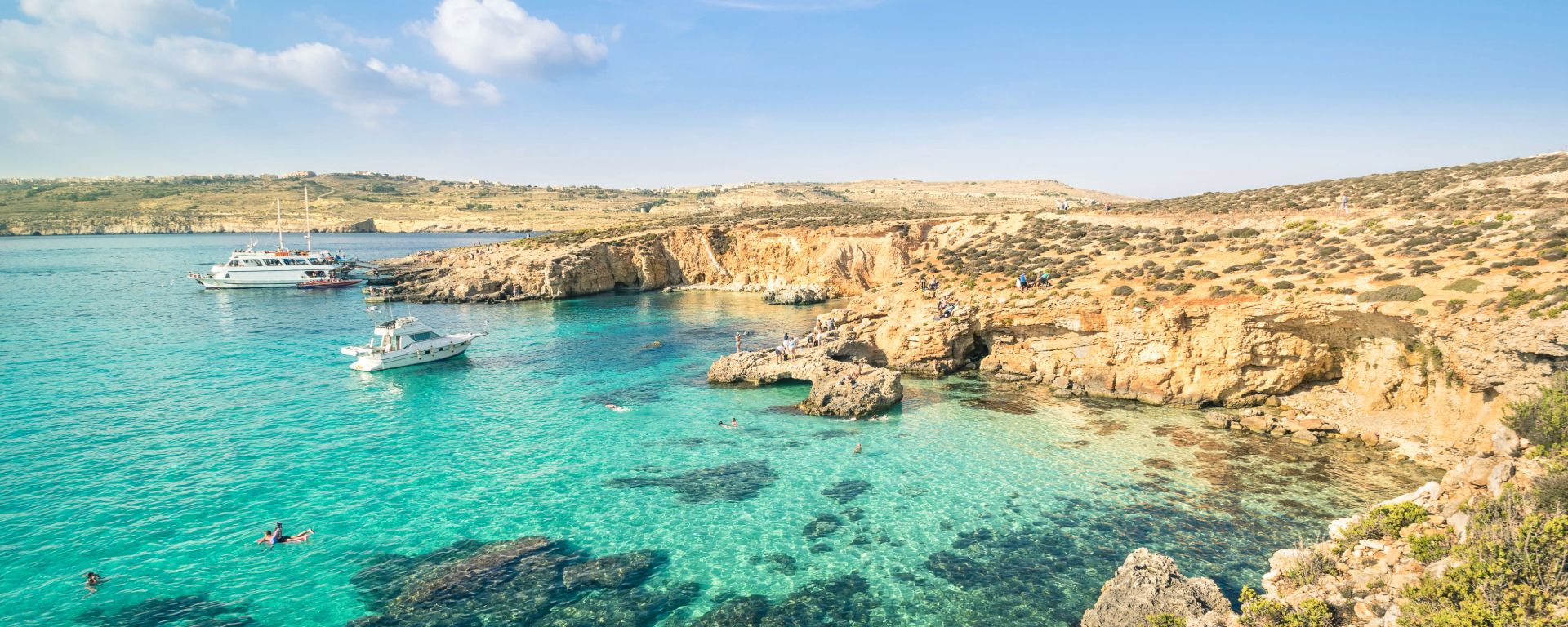
Peak season to travel to Malta is undoubtedly in the summer, and it’s no wonder. With highs of 31 degrees and minimal rainfall, it’s the dreamiest European beach destination. Tourists head to the northern coast for its stunning sandy bays, such as the family-friendly Mellieħa Bay and the picturesque Golden Bay. For those seeking more adventurous spots, the deep, clear waters of St. Peter’s Pool provide a natural rocky playground for cliff jumping, while the legendary Blue Lagoon on the nearby island of Comino remains a top destination for its brilliant turquoise swimming spots.

Malta’s sister island of Gozo is trending among the world of travel and is fast becoming the go-to destination for summer 2026. Its famous red-sand Ramla Bay offers an unspoiled escape from the holiday crowds.
- Average High temperature: 27°C to 31°C (81°F to 88°F)
- Average Low temperature: 18°C to 22°C (64°F to 72°F)
- What to pack: Swimwear, sunscreen and beach towels. Dive equipment and swimming goggles.
Autumn in Malta: Warm Water Window
In autumn, the Mediterranean Sea has benefited from a full summer of sunshine and retains much of its warmth, making it a great time to visit Malta for water sports with fewer crowds. While peak temperatures occur in July and August, the average sea temperature remains a balmy 25 to 26 degrees in September and a comfortable 23 to 24 degrees throughout October. This “warm water window” extends even into November. With the summer heatwaves over, these milder conditions are ideal for a range of water sports, including diving and snorkelling around Malta’s shipwrecks and caves, windsurfing, paddle boarding and kitesurfing, particularly around St Paul’s Bay and Mellieħa or a relaxing boat tour or sailing cruise along the dramatic coastline.
- Average High temperature: 20°C to 28°C (68°F to 82°F)
- Average Low temperature: 14°C to 20°C (57°F to 68°F)
- What to pack: Light layers, water sports and diving equipment.

Winter in Malta: The Ultimate Winter Sun escape
Is Malta a Good Winter Sun Escape?
Yes, absolutely. Temperatures in the summer months go well beyond 25 degrees, but the winter months remain balmy, with temperatures staying in the mid to high teens. October through to March is a great time to visit Malta, and bonus, you’ll be avoiding the school holiday crowds. If exploring the local history and culture is more your scene, you’ll benefit from lower flight costs and out-of-season hotel deals.
- Average High temperature: 15°C to 17°C (59°F to 62°F)
- Average Low temperature: 9°C to 11°C (48°F to 52°F)
- What to pack: Sunglasses for bright winter days, layers and a coat for the chillier evenings and comfy walking shoes.
Helpful hints for planning your trip to Malta:
What is the best month to visit Malta for warm weather?
If sunshine and warm weather are on your mind, we recommend visiting Malta between May and September, where temperatures range from lows of 23 degrees to highs of 31 degrees and rainfall is minimal.
When is the hottest month in Malta?
August is typically the hottest month in Malta with average highs of 31 to 32°C (90°F), though July offers the most consistent sunshine.
Can you swim in Malta in October?
The Mediterranean Sea is usually plenty warm enough to swim in October, as all that summer sunshine means the temperature averages around 22-24 degrees at the start of the month, and drops towards the end of October. July to October is known as the ‘Warm Water Window’, so it’s a great time to visit Malta if you like sea swimming. If you prefer much warmer water, plenty of hotels have heated indoor and outdoor pools, so it’s well worth checking before you book to make sure yours has what you need.
Discover Secret Escapes’ Best Malta Holidays
Whether it’s winter sun, an autumn city break or a dreamy beach escape, check out Secret Escapes’ outrageously bookable offers on Malta hotels and package holiday deals.
For more travel advice and inspiration, deep dive further into the Escapist magazine, and for any assistance booking the Malta escape of your dreams, get in touch with us.


