
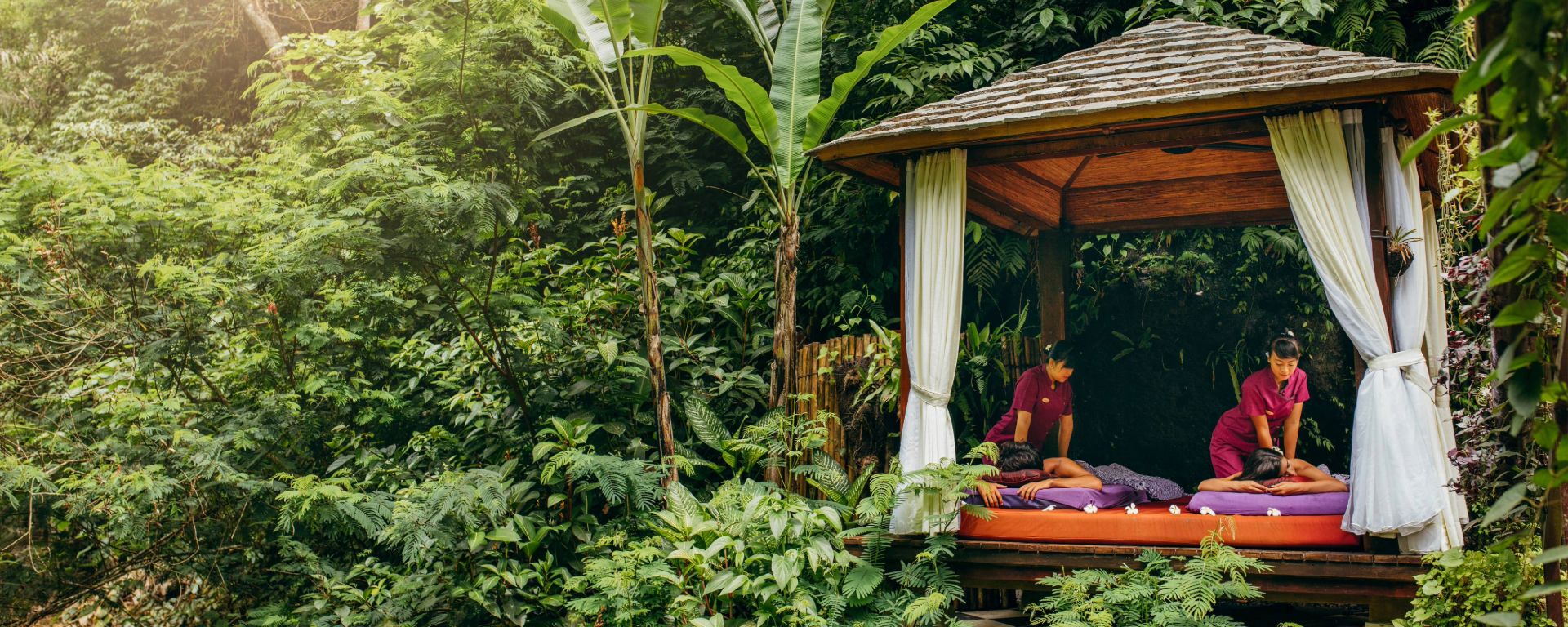
Bali’s wellness culture has quietly evolved. Where once the island was synonymous with intense detoxes and packed yoga schedules, today the focus has softened. Wellness on this island centres on nervous system support – prioritising rest, somatic grounding, spiritual silence, and slow travel.
Rather than “fixing” the body, Bali invites visitors to listen to it. Private pool holidays tucked into jungle valleys, barefoot luxury retreats with space to breathe, and rituals rooted in ancient wisdom offer something far more sustainable: deep restoration.

Origins of Balinese Wellness Culture
At the heart of Balinese life lies Tri Hita Karana, a philosophy that translates to “the three causes of well-being”. It emphasises harmony across three realms: Parahyangan (harmony with the divine), Pawongan (harmony among people and community), and Palemahan (harmony with nature and the environment).
This philosophy is deeply ingrained in the Balinese way of life, shaping daily offerings, temple architecture, village layout, and the rhythm of everyday life. The Balinese believe that true wellness blossoms when these three connections are nurtured and balanced.
This deep reverence for nature predates Hinduism. Long before its arrival, Bali’s indigenous communities practised animism, believing spirits resided in mountains, rivers, forests, and ancient trees. This primal connection laid the foundation for understanding the healing properties of plants and the powerful influence of place on well-being.
Influenced by the ancient Indian system of Ayurveda, Bali developed its own healing tradition known as Usada. This includes herbal remedies (lelampah), traditional massage (pijat), and spiritual healing guided by village healers known as Balian. Combined with the Balinese people’s naturally warm hospitality, these traditions create a wellness culture that feels intuitive, generous, and deeply human.
The Art of Melukat
Melukat is a traditional Balinese water purification ritual designed to cleanse the mind and soul of negative energy and ‘manah’ (heavy thoughts), restore balance, and reconnect participants with themselves and the divine. Performed at sacred springs, rivers, or temples, the ceremony involves prayer, offerings, and the symbolic washing of body and spirit.
While Melukat has become increasingly popular with visitors, its essence remains deeply personal. When done mindfully and respectfully, it can be one of the most grounding experiences of a Bali retreat.
Where Can I Experience a Melukat Ceremony Without Tourists?
To experience an authentic ceremony with fewer crowds, visit famous temples at quieter times – usually early morning or late afternoon; at these times, even popular places like Tirta Empul can feel a little bit more intimate. Alternatively, seek less famous temples.
Pura Mengening is just a short walk from Tirta Empul, yet largely overlooked. This temple offers serene jungle surroundings and intimate pools and is one of the most affordable Melukat sites in Bali. Sebatu is another great secluded option, a hidden waterfall ritual site near Tegallalang that remains almost entirely untouched by mass tourism, ideal for those seeking authentic immersion and spiritual stillness.
For a more intimate experience, you can ask locals and retreat hosts to guide you to family shrines or river sites rarely visited by tourists.
Nyepi: Bali’s Day of Spiritual Silence
Nyepi, the Balinese Hindu New Year, is a 24-hour period of total silence, introspection, and purification. From sunrise to sunrise, the entire island shuts down: no flights, no traffic, no lights, no internet. Nyepi represents the ultimate spiritual silence. It offers a rare opportunity to disconnect from external noise and sit with oneself completely, a living embodiment of Bali’s commitment to spiritual balance.
If you’re planning to travel to Bali for Nyepi, make sure to do your research: check what day Nyepi falls on – as Nyepi is celebrated according to the Balinese Saka calendar, it falls on a different day each year on the Gregorian calendar. You should always plan your flights and accommodation in advance, as on the day, airports will close, and services will cease.
Beyond Ubud: Quiet Alternatives for Yoga and Meditation
Ubud remains Bali’s cultural heart, known for its art, temples, and yoga scene. However, its popularity means it no longer offers the quiet many seekers crave. Fortunately, Bali has gentler, lesser-known destinations perfect for yoga, meditation, and slow living.
Nusa Lembongan
An island escape just off Bali’s southeast coast, Nusa Lembongan offers ocean breezes, barefoot simplicity, and deeply calming energy. It’s an ideal location for travellers seeking sunrise yoga, reef walks, and ocean-facing meditation.
Best time to go: April and May, as the transition from wet to dry season offers great weather and fewer tourists after the busy holidays. September and October are still dry and sunny, with calm seas, but crowds thin out significantly after the summer rush. From November to March, expect the fewest people and best deals, lush green scenery, and occasional rain showers.

Sanur
Sanur offers a grounded, local feel while still being close to Bali’s cultural highlights. A relaxed former fishing village, Sanur is perfect for those drawn to what’s often called ‘maritime wellness’, long beach walks, gentle cycling paths, and calm waters.
Best time to go: April to June offers warm, sunny weather with fewer crowds, perfect for outdoor practice.
Sidemen
Set in East Bali, Sidemen is a tranquil valley of emerald rice terraces and traditional villages. It’s ideal for nature lovers seeking cultural immersion and quiet reflection. Activities include guided village walks, cycling through rice fields, and meditative trekking along river paths.
Best time to go: April, May, September, and October for pleasant (mostly dry) weather and fewer visitors, making for a tranquil experience. We recommend travelling in November or March; though the island transitions in and out of rainy season, meaning high chances of showers, it also means more vibrant, lush greenery, lower prices, and fewer crowds.

Tabanan
The home of total spiritual silence, Tabanan offers a rugged, local feel far from the tourist trail. It’s a stunning region of rice paddies and misty hills and home to the famous Bali Silent Retreat, known for extended periods of silence and deep introspection.
Best time to go: May, June, and September are ideal for balancing good weather with slightly fewer crowds than the peak summer period in July and August.
Culinary Healing: Where to Find Plant-Based Fine Dining in Bali
Bali’s culinary scene reflects its reverence for fresh, local ingredients and farm-to-table philosophy. It’s now recognised as one of the world’s top vegan and plant-based travel destinations. Discover some of our favourite foodie spots below.
- Sakti Dining Room (Fivelements) is an award-winning destination set within a stunning bamboo structure, offering elevated, ceremonial dining rooted in Ayurvedic principles.
- Moksa Ubud features its own permaculture garden, serving vibrant, chef-driven dishes that are as beautiful as they are nutritious.
- Zest Ubud is a community favourite that describes its menu as “powered by plants, made for people,” focusing on locally grown, sustainable ingredients.
Best Time to Go to Bali for a Wellness Retreat
While Bali is a year-round travel destination, the best time to go depends on what you’re looking to get out of your trip. For deep reflection and relaxation, go during the Green Season (December to March); this period offers lush landscapes, fewer crowds, and slightly cooler weather, with the rain providing a soothing backdrop for indoor meditation.
The shoulder season (April to June and September to October) offers the perfect balance of clear skies, lower humidity, and manageable tourist numbers. Ideal for experiencing a Melukat ceremony, outdoor yoga, and meditative trekking.
These periods align beautifully with slow travel in Bali and more authentic retreat experiences.
Reset, Recharge, and Renew with Secret Escapes’ Deals on Bali Retreats
From spiritual silence in Tabanan to barefoot luxury retreats in Sidemen and private pool sanctuaries overlooking rice fields, Bali offers countless ways to reset in 2026, and Secret Escapes offers plenty of deals on Indonesia holidays.
Explore our hand-picked package holiday deals on Bali retreats and discover a softer, deeper approach to wellness at a fraction of the cost. For more travel advice and inspiration, deep dive further into the Escapist magazine, or get in touch for more information.